

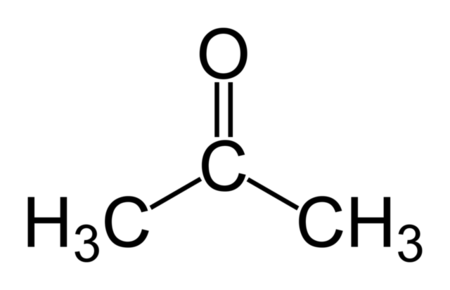
Has anyone ever calculated the evaporation losses, by weight, of acetone during a workday?
We did, and you’ll be surprised to learn how just a few grams of this product release a significant amount of gas (vapor) harmful to the environment and humans (VOCs). And we’re only talking about evaporation losses, not how much acetone actually evaporates during use.
We performed this leakage assessment test at a room temperature of 20°C, so you can imagine that in summer temperatures, the figure we measured will certainly be higher.
See the video tests where we compared the evaporation losses of acetone vs. our substitute products.
In 15 minutes, at room temperature 20°C, approximately 250 mg of product is lost.
So, in 1 hour, 1 g of acetone is lost, which corresponds to 1.26 ml.
1 g of acetone, at room temperature, produces approximately 0.569 liters of gas (vapor).
If we left our beaker with the acetone exposed to air for 8 hours, we would lose 8 g of acetone, which corresponds to 10.08 ml. 8 g of acetone produces 4.552 liters of gas (vapor).
These 4.55 liters are all VOCs that are released into the atmosphere without any cleaning!
1 g of acetone produces a variable amount of VOCs (Volatile Organic Compounds) depending on temperature and pressure. At room temperature (about 20°C), acetone evaporates completely, releasing all its volatile compounds into the air. There is no precise value for VOCs emitted in terms of grams, but it can be said that 1 gram of acetone corresponds to 1 gram of VOCs, since acetone itself is a VOC.
Volatile organic compounds (VOCs) are chemicals that evaporate easily at room temperature, releasing gases into the air. These compounds can originate from various sources, both natural and anthropogenic, and are present in many commonly used materials and products. VOCs can have negative effects on human health and the environment, contributing to air pollution and the formation of ozone and fine particulate matter.
What do VOCs do?
Air pollution:
VOCs, together with nitrogen oxides, contribute to the formation of ozone and PM2.5, the main components of smog, both indoors and outdoors.
Health risks:
Exposure to VOCs can cause eye, nose, and throat irritation, headaches, nausea, and, in some cases, more serious problems such as nervous system damage, allergic reactions, and, in the long term, potential carcinogenic effects.
Plant damage:
The formation of ozone, in turn, can damage plants, reducing crop yields and increasing their susceptibility to disease.
Greenhouse effect:
Some VOCs, such as methane, contribute to the greenhouse effect and climate change.
Main sources of VOCs?
Industry:
Industrial processes, such as paint production, printing, shoe manufacturing, woodworking, and pharmaceutical production.
Transportation:
Vehicle and fuel emissions are another major source of VOCs.
How can you reduce the impact of VOCs?
Low-VOC products:
Choose products with low-VOC emission certifications.
Waste Management:
Properly dispose of waste containing VOCs, avoiding burning or dispersing them into the environment.
Reducing Industrial Emissions:
Take measures to reduce VOC emissions from industrial operations, such as installing abatement systems and replacing harmful solvents.