

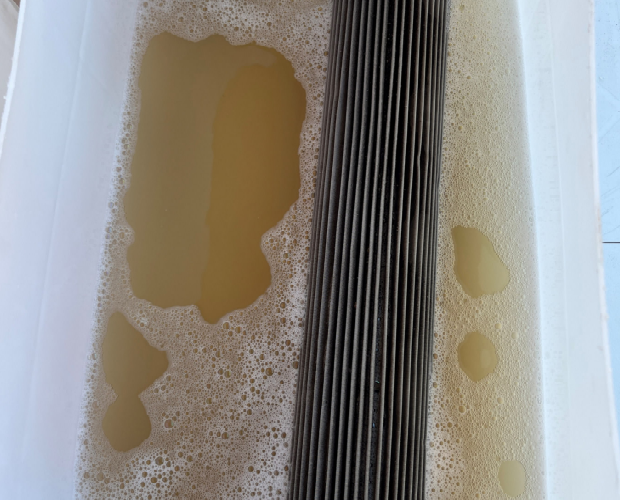
One tank, one brush and 30 minutes: what happens when an enzymatic detergent does the work.
Metal filters exposed to oils and cutting fluids clog quickly. The most common solution is a washing machine, but for a few parts or occasional cleaning it is often out of proportion. We tested in practice whether a suitable detergent would be enough, using DD 4107, the protective anti-corrosion degreaser from A&B Laboratorios.
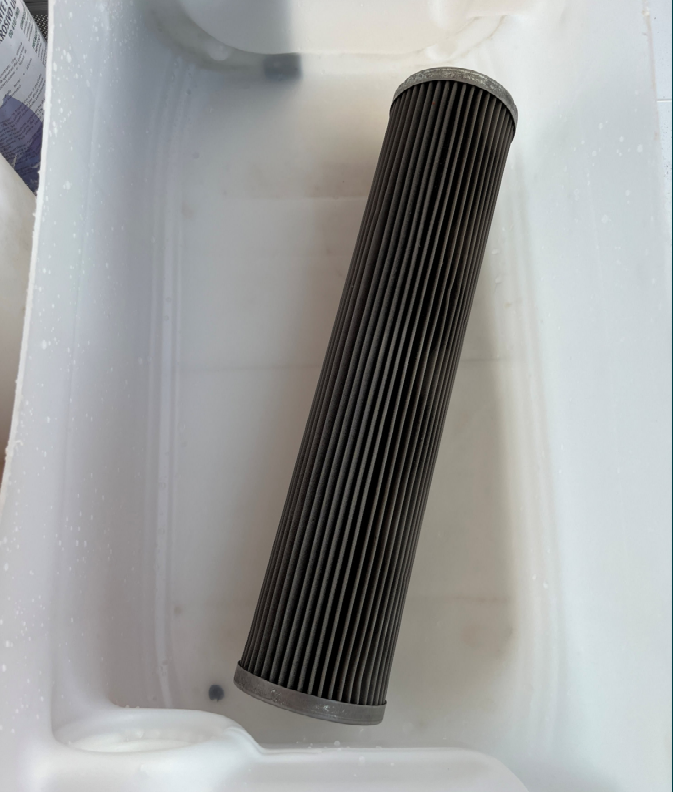
The product
DD 4107 is a concentrated aqueous mixture for professional and industrial use, fully miscible with water. It contains non-ionic surfactants (5-15%), amphoteric surfactants (less than 5%) and enzymes. Its components also include a small share of 2-aminoethanol (1-2.5%) and potassium hydroxide (0.1-1%), which contribute to its alkalinity. The pH of the concentrate is 10.6-11.4, so it is moderately alkaline. It is not flammable (flash point above 60 °C) and has a density of 1000-1050 kg/m³.
The Application Protocol recommends it for washing machines and ultrasonic baths, from 15 to 60 °C, at a dosage between 0.5% and 5%. Besides degreasing, it provides anti-corrosion protection during washing, an advantage when treating iron and steel parts.
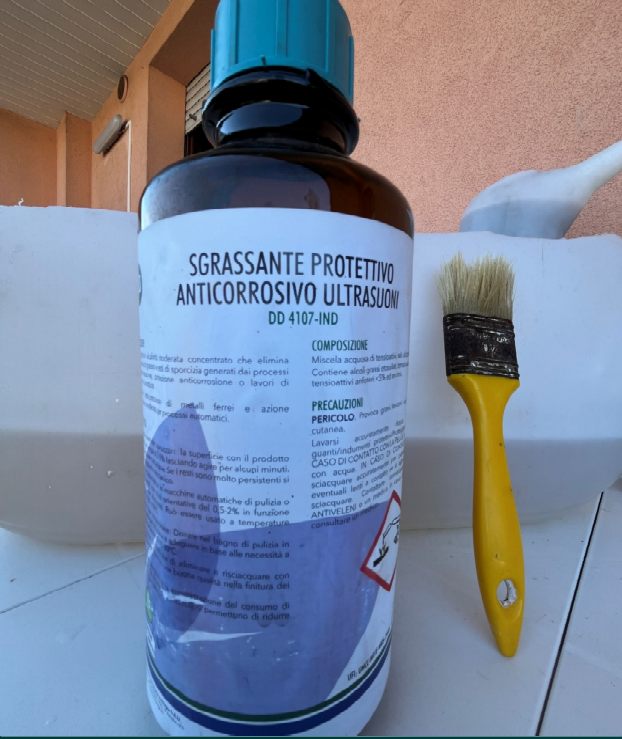
The test
- Bath: 5000 ml of demineralised water + 300 ml of DD 4107, for a total of 5300 ml (concentration 5.7%).
- Temperature: room temperature, about 23 °C.
- Method: filter immersed in the bath, manual mechanical action with a brush for 5 minutes, then removal.
- Start: 9:00 a.m. End of the process: 9:30 a.m., rinse included.
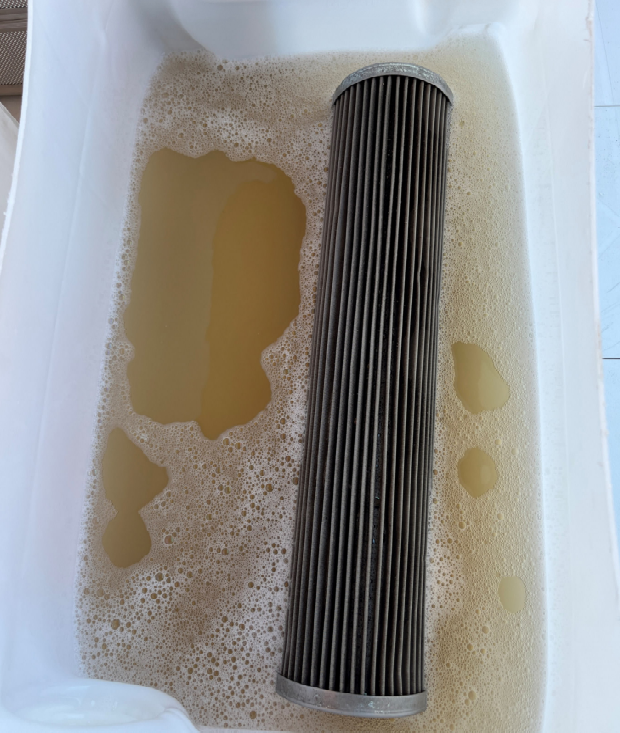
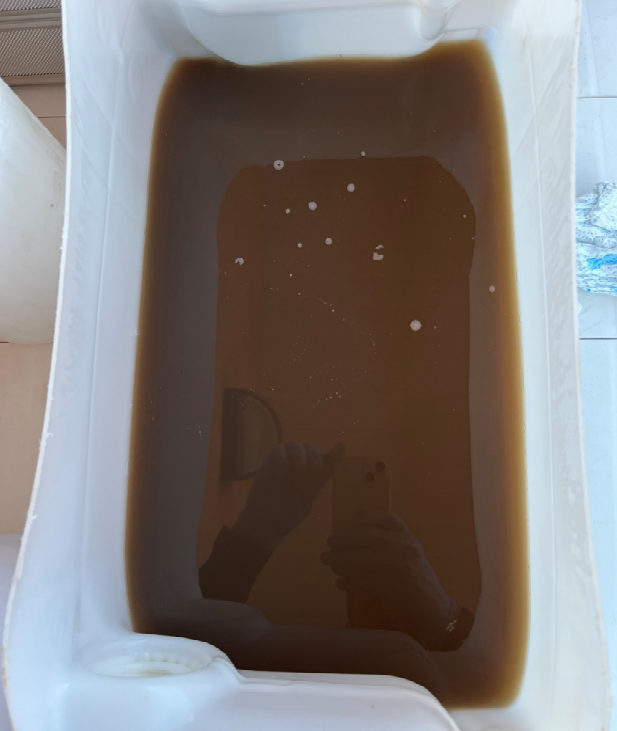
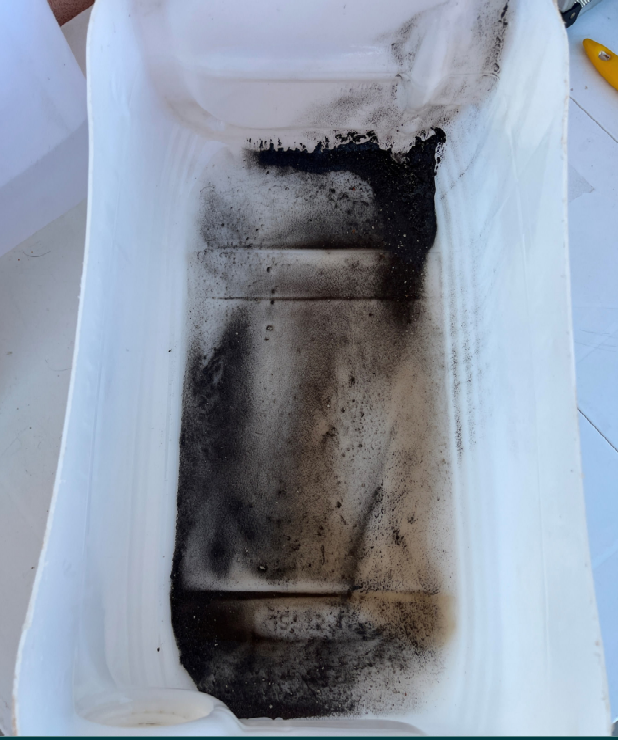
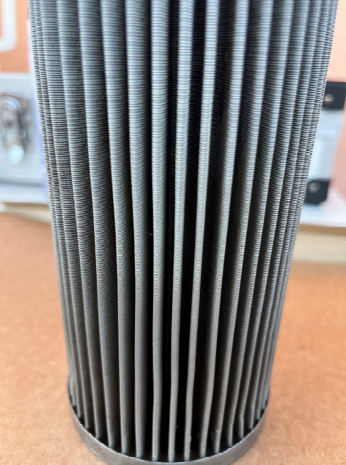
The concentration used, 5.7%, is slightly above the 5% maximum indicated in the Application Protocol. The test was carried out at room temperature, well below the 60 °C limit foreseen for the product. The detergent started acting on the oily residues after a few seconds. The filter came out clean, while the bath turned dark. A good amount of ferrous residue settled at the bottom of the tank.
The rinse that makes the difference
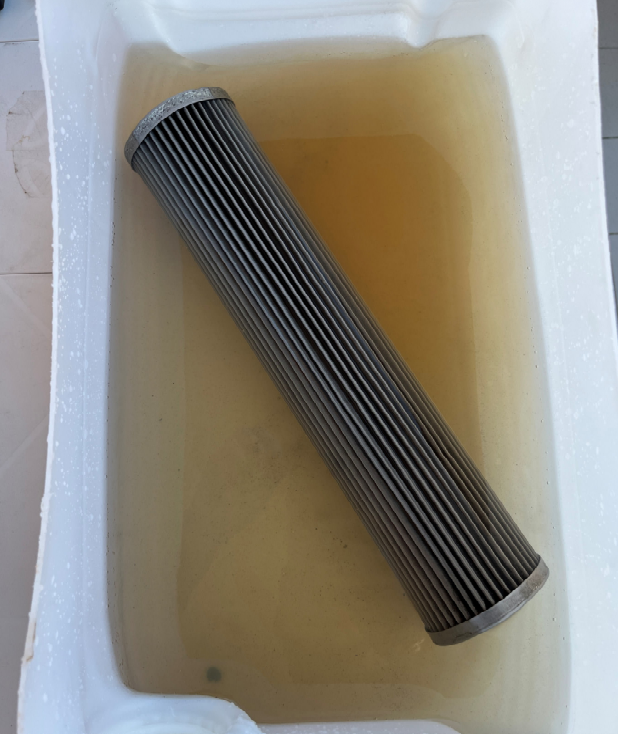
After the bath we rinsed the filter in plain demineralised water, with a simple rotating movement. The water turned coloured almost immediately. The enzymes left trapped in the mesh kept working and released more grease. Metal precipitate appeared again in the rinse. The filter was already clean when it came out of the bath, but the rinse removed more dirt that could not be seen.
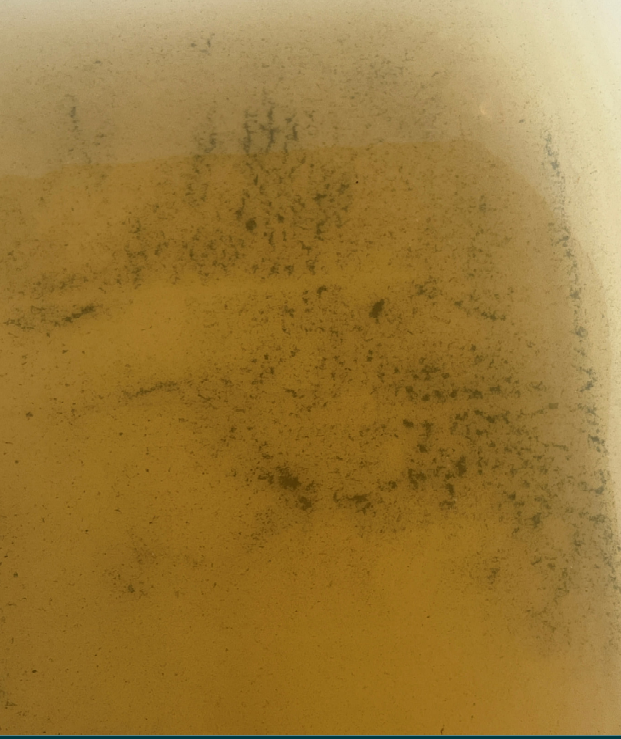
What happens to the bath after 48 hours
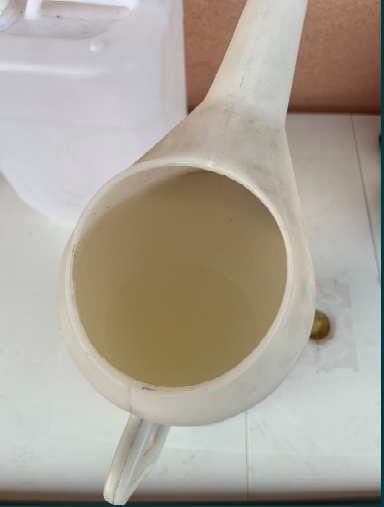
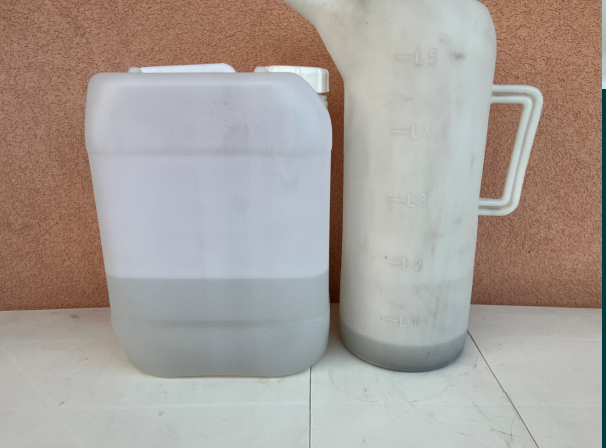
We poured the spent bath into a separate container and let it rest. After 48 hours the organic oily part was completely degraded, and the metals that had been in suspension had settled at the bottom. The enzymes keep degrading oils and fats even after washing is over. The practical benefit is bath life. The protocol provides for removing the floating residues and topping up product and water when needed, instead of making a new bath from scratch. Fewer replacements mean less product consumed and less waste.
What you need (and what you don’t)
For a few parts, a tank, a bristle brush or scrubbing brush and a suitable detergent are enough. A washing machine makes sense when washing is frequent or the number of parts is high.
Safety: the concentrate is not the diluted product
The concentrate is classified as a skin irritant (H315) and as causing serious eye damage (H318). The Safety Data Sheet recommends nitrile gloves (0.4 mm thickness, breakthrough time over 480 minutes) and splash-proof goggles. In case of eye contact, rinse with plenty of water for at least 15 minutes and seek medical advice. The protocol specifies that the ready-to-use product, at dosages below 10%, is not classified as hazardous and does not require PPE. Store between 5 and 30 °C, away from food. Avoid contact with strong acids and with strong alkalis or bases.
Environment
The surfactants in the product meet the biodegradability criteria of Regulation (EC) No 648/2004 on detergents, and the product is not regulated for transport (ADR, IMDG, IATA). The spent bath, however, contains oils and metals removed from the part. It must therefore be managed as waste in accordance with current regulations, through an authorised waste handler, and not discharged into watercourses.